
Used Motorbike Buying Checklist (UK)
A step-by-step checklist for buying a used bike: what to check online, in the paperwork and on the motorbike itself.
Check a motorbike now
Enter the registration to see the bike’s details and request a free Pro report.
Free. No sign-up needed. UK registrations only.
Before you view: ask the seller and run a reg check
Most bad deals can be spotted before you leave the house. Ask the seller these questions by phone or message:
- How long have you owned it, and why are you selling?
- Do you have the V5C in your name and at your address?
- Is there a full service history and how many keys come with the bike?
- Has it ever been dropped, crashed or repaired after an accident?
Then run a motorbike reg check on the number plate. Make sure the make, model, colour and engine size match the advert and look at the MOT status, mileage at the last test and keeper count. Read the MOT history for repeated advisories and any mileage that goes down, and check the tax position. A history check like this is a starting point, not a replacement for looking at the bike.
Paperwork: V5C, service history, MOT certificates and receipts
- V5C logbook: the seller’s name and address should match. Check the document looks genuine, not a copy, and that the details match the bike.
- VIN and engine number: match them to the V5C yourself. See the motorbike VIN and frame number guide.
- MOT certificates: compare paper certificates with the online MOT history and mileage.
- Service history: dated stamps and receipts that include mileages are a second independent record.
- Keys and manual: a missing spare key is not a deal-breaker, but it is worth a price discussion.
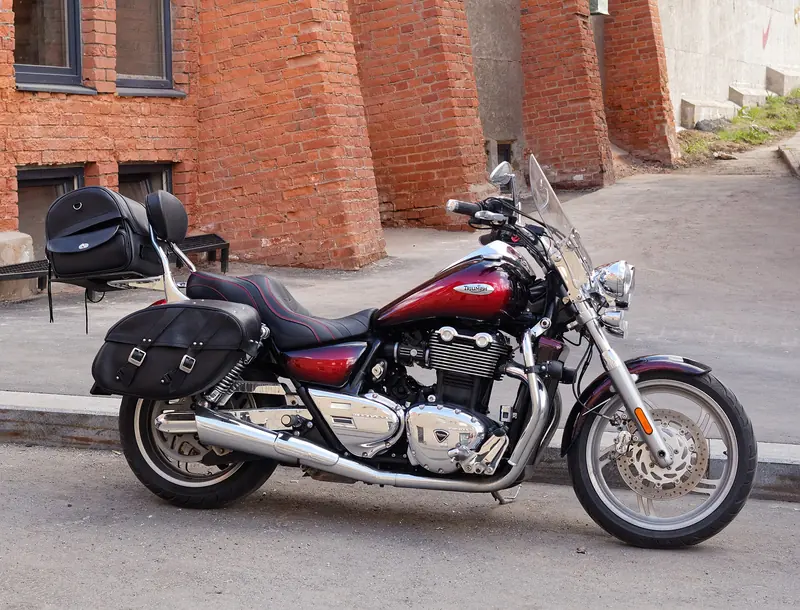
Walk-around: frame, forks, tyres, chain, brakes, lights and exhaust
View the bike in daylight, ideally with the engine cold. Ask the seller not to warm it up before you arrive, because a cold start reveals problems that disappear once an engine is warm.
- Frame and forks: look for cracks, repaired welds, bent bars, scratched fork legs and oil on the seals.
- Tyres and wheels: check tread, age (the date code on the sidewall), cracks and bent rims.
- Chain and sprockets: hooked teeth, tight links or a dry, rusty chain suggest neglect.
- Brakes: look at disc condition and pad thickness, and check the levers feel firm.
- Lights and indicators: test every light, the horn and the switchgear.
- Exhaust: look for dents, rust, cracks and leaks at the joints.
- Signs of a crash: scuffed levers and footpegs, mismatched or new bodywork, or a bent exhaust.
Engine and electrics: cold start, smoke, leaks and warning lights
- The engine should start promptly from cold and settle to a steady idle.
- Blue smoke can mean oil burning, white smoke can mean coolant, and black smoke usually means fuelling problems.
- Look under the engine and around the radiator, hoses and gaskets for wet patches.
- Check the battery condition, terminals and charging output if the seller allows it.
- Switch the ignition on and check that the dash warning lights come on and then go out.
Test ride: what to feel, hear and do
Only ride a bike if you are insured to do so, and ask the seller to confirm their cover. Listen for knocks, check that the bike pulls cleanly through every gear, that the clutch bites smoothly and that it tracks straight with no wobble. Brake firmly in a safe place, and check the bike stops in a straight line with no judder or pulling. Listen for noises from the chain, wheel bearings and forks over bumps.
Red flags: mileage that does not add up, mismatched numbers and pressure to pay cash
Walk away if: the seller will not show the V5C, the frame or engine numbers do not match, the price is far below the market, the mileage on the clock does not match the MOT history, the seller wants to meet somewhere other than their home address, or you are pushed to pay in cash straight away.
Finance, stolen and write-off risks: what a history check can and cannot tell you
A free reg check and MOT history cannot tell you whether a bike has outstanding finance, is recorded as stolen or has been written off. Those records are held in separate databases that are normally only available through a paid history check, and this site does not check them. If you are paying real money, run a history check that covers them from a provider you trust, and read our guide on how to check if a motorbike is stolen or written off.
Paying and taxing the bike after purchase
- Get a written receipt with both names, the date, the registration number and the frame number.
- Complete the new keeper section of the V5C with the seller. The seller sends the change to the DVLA, either online or by post, and you keep the new keeper slip.
- Arrange insurance before you ride the bike away.
- Tax the bike before you ride, because tax does not transfer. See our motorbike tax check guide.
Frequently asked questions
What should I check when buying a used motorbike?
Check the paperwork (V5C, MOT and service history), run a reg check and read the MOT history, inspect the bike carefully from cold and test ride it if you can.
How do I check a used motorbike before buying?
Run a reg check, compare the details with the advert, check the MOT history and mileage, see the V5C and match the VIN, then inspect and ride the bike.
Can I buy a motorbike without a V5C?
It is risky. Without the V5C you cannot confirm who the keeper is, and registering the bike in your name is harder. Most buyers walk away.
Should I pay a deposit before viewing a bike?
Avoid paying anything before you have seen the bike and its paperwork in person. Deposit requests from strangers by bank transfer are a common scam.
Does a reg check show finance, stolen or write-off records?
No. Our free check and pro report do not cover those records. A dedicated history check from a provider you trust is needed for them.